
The Origin of this Prospect & Flourish
Nearly 30 Years in the Making
The program you are looking at did not appear overnight. What you are seeing is the current shape of something that has been written, taught, argued over, and rebuilt for the better part of thirty years. That is the whole point of this page — because these days, anyone can have a tool spin up a "program" over a weekend, and you have every right to be skeptical of the ones that did.
A lunch, and an idea that wasn't mine
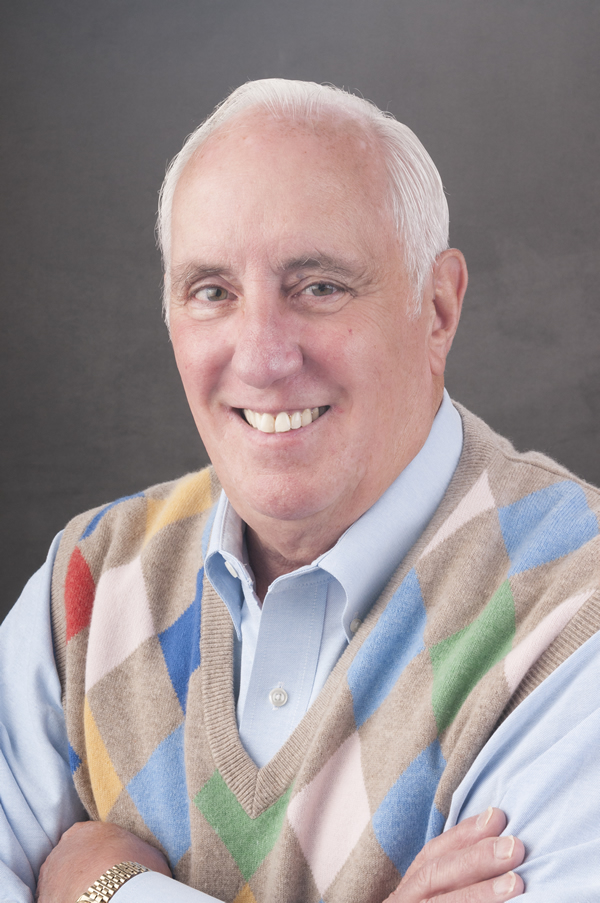
I want to be clear about this up front: the original idea was not mine. It belonged to I. David Cohen — a highly respected insurance man with more than forty years of producing and training behind him by the time we sat down together in early 2005. I still remember the lunch meeting where he pitched me the concept.
"What is the number one problem insurance producers have?" he asked me. I shrugged.
"Prospecting!" he exclaimed. "And no one in this business teaches it! All you get is the phone book."
David had seen, across a long career, the one thing everyone in this business eventually learns the hard way: prospecting is the weakest link in the sales process. And unlike most people, he decided somebody ought to do something about it.
He came to me because he knew my work. In the late 1990s I had written and published a career-development book for college students called Don't Wait Until You Graduate! (a second edition followed in 2003, along with a Chinese translation). On paper it was about starting your career early (by serving needs rather than job hunting); underneath, it was about building a service ethic, sharpening how you network and communicate, becoming socially mobile, and building relationships.
In other words, it was about prospecting — though I don't think the word appears anywhere in any editions of the book. David saw it for what it was. So he asked a writer in his thirties, who still had a great deal to learn from him as well as countless others, to help him build the thing. He was as much a mentor to me as a client, and I have never made any secret of that.
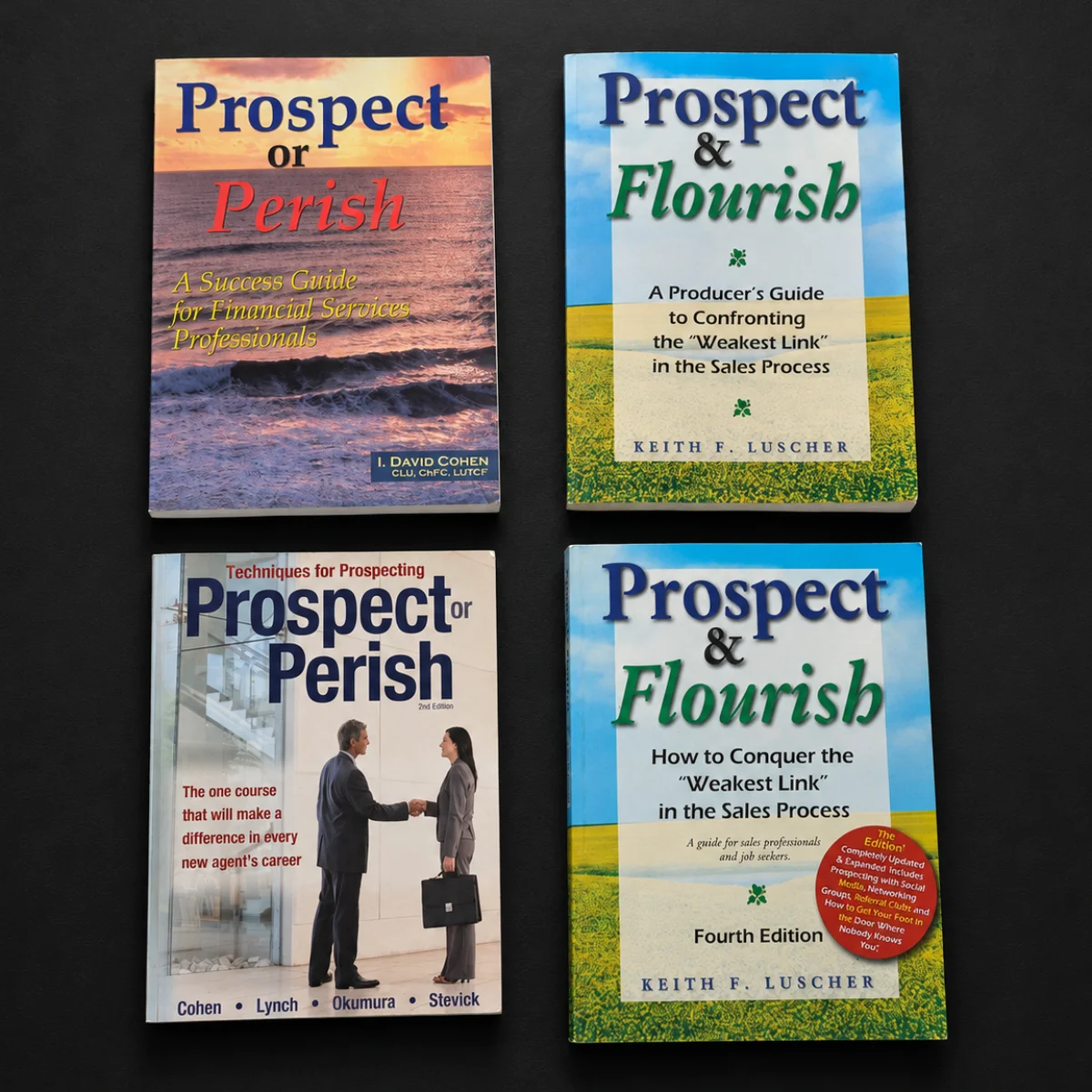
"Prospect or Perish"
What came out of that collaboration was Prospect or Perish: A Success Guide for Financial Services Professionals — the program and the textbook, published under David's byline (per our arrangement). It made its debut in September of 2005 as a curriculum course offered through Capital University in Columbus, Ohio. Not long after, the program was acquired by The American College in Bryn Mawr, Pennsylvania, where over the following years it was re-engineered and folded into several of the college's professional-designation programs.
Making it my own — and everyone's
In 2007, I took the core of what I had brought to that project, along with material from other work of my own, reworked it, and expanded it into Prospect & Flourish (David went with the stick...I chose the carrot!). The goal was to serve a much wider audience than financial services and insurance — the whole population of relationship-driven professionals who live and die by the same weakest link, whether they sell homes, advice, coverage, consulting, or their own expertise.
Why there's now an online "fifth edition"
Twenty years on, the heart of the problem hasn't moved an inch. Prospecting is still the bridge between marketing and sales, and trust is still the only currency that ultimately matters. What has changed is everything around it — the tools, the platforms, the automation, the sheer volume of noise, and buyers who are more informed and more guarded than they have ever been. So the current edition is not just a reprint with a new cover. It is a massive expansion and reimagining: the principles are the ones that don't change, and the structure, the tools, and the rhythm are rebuilt for the world as it actually is now.
What this means to you is simple. When you work through what's on this site and, hopefully, in the actual program itself, you are not getting something a machine assembled last Tuesday. You are getting a body of work that was conceived by a forty-year veteran, taught in a university and a professional college, carried and refined across multiple editions, and pressure-tested against nearly three decades of a problem that refuses to go away.
That history is not nostalgia. It is the reason you can trust what's here.