
The Prospect & Flourish Execution Cohorts™
Where Knowing Becomes Doing.
You recruit capable producers and you train them well. In an Execution Cohort, each producer builds a prospecting structure of his own, and you take up the part in it that only you can play.

Move beyond repeated training, pressure, and churn-and-burn.
Schedule a ConversationIt costs nothing. It begins with a few short questions about you, your team, and the producers you have in mind.
Not ready for that? Join an Execution Enigma RoundtableIt’s Not That Your Producers Haven’t Been Trained
The trouble is that training so rarely becomes consistent prospecting.
Your firm has invested heavily in product knowledge, compliance, systems, sales techniques, incentives, and activity goals. The working assumption is that information, motivation, and pressure will somehow add up to disciplined prospecting behavior. It rarely does.
What you see instead is uneven activity, unreliable pipelines, and the same performance gaps recurring across the team. Some producers prospect in short bursts when pressure rises, then let it be crowded out by client service, administrative demands, and whatever feels most urgent that day. You repeat expectations, inspect activity, introduce incentives, recommend more training, or recruit replacements, and the underlying pattern remains. Results lean too heavily on the few producers who naturally impose structure on themselves.
Keith Luscher calls this the Execution Enigma™: the stubborn gap between what producers are taught and expected to do, and what they consistently do. When the way a team is structured works against consistent execution, more training only adds to the noise.


What the Gap Costs You and Your Team
You care about developing people, and you believe many of your producers are capable. Yet repeated inconsistency pulls you into an exhausting cycle of reminding, chasing, pressuring, and sometimes replacing. You may feel caught between holding people accountable and not wanting leadership to become little more than policing activity. Over time, a leader begins to question his own leadership, the commitment of his people, and whether lasting change is even possible.
Without a change in the conditions, the pattern tends to hold:
- Capable producers stall before they flourish. Promising people lose confidence, disengage, or leave the profession before they have built a sustainable book of business.
- Recruiting and training investments are lost again and again. New people are brought in to replace those who did not develop, and they meet the same execution gap.
- The culture drifts toward churn and burn. Despite your best intentions, producers begin to feel more like replaceable production units than professionals being developed. Pressure rises, trust declines, and replacement becomes easier than formation.
Left unresolved, the organizational Execution Enigma turns training into frustration, accountability into pressure, and producer development into a revolving door.
Accountability and Dignity Should Not Be a Choice
It is just plain wrong to recruit capable people, train them mainly on what they sell, measure what they produce, and then treat inconsistent execution as proof that they lack commitment or ability, especially when the firm may not have created the conditions that formation requires.
Producers are not disposable production units, and good leaders should not have to choose between holding people accountable and treating them with dignity. Both deserve better: a culture that pairs clear expectations with structure, guidance, and repeated practice, and gives producers room to grow into disciplined, trust-first professionals.
Knowing becomes doing across a team when the leader sees himself as part of the structure, not just the source of expectations.

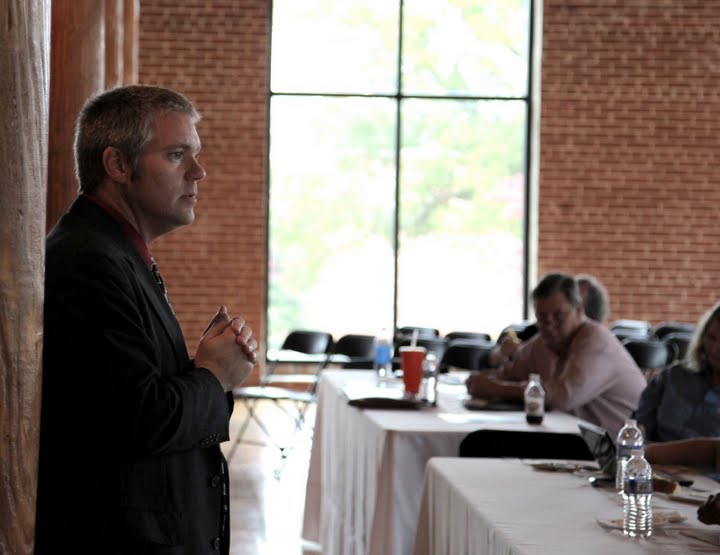
Keith Luscher, Management Consultant and Fractional CMO, SYP Media, LLC
You Are Not Wrong to Expect Results
Keith Luscher knows what it is like to be responsible for both people and results: to see real potential in capable people, invest in their development, and still watch training fail to become consistent execution. You are not wrong to expect results, and you are not naïve to believe your people deserve more than repeated pressure and replacement.
Luscher first developed the foundation of Prospect & Flourish more than twenty years ago with I. David Cohen, a respected veteran of the insurance industry. Originally introduced through Capital University as Prospect or Perish, the program was soon acquired by The American College and adapted for professional education in financial services. Luscher has continued refining and expanding the work since, through multiple editions, books, workshops, consulting, and real-world application with professionals, teams, and firms.
That experience has reinforced a central truth: training alone rarely produces lasting behavior change. Consistent execution grows from clear structure, ongoing guidance, accountability, repeated practice, and a culture that treats development as continuing formation rather than a one-time event.

First, a Word About Prospect & Flourish
Prospect & Flourish™: From Random Acts to Rhythmic Growth™ is a self-study online course of four modules and ten units, devoted to one subject: prospecting (not sales). Your producer works through it during the cohort, one unit per week.
It is a substantial curriculum, but more training is not what is being proposed here. The course supplies the knowledge. The cohort, with your part in it, is where that knowledge gets acted on.



Your Part in It
What to Expect Once the Cohort Begins
You are not in the weekly sessions. This is the part you play alongside them over the ten weeks.
BEFORE WEEK 1
Start Where Your Producer Starts
You go through onboarding alongside your producer and answer the same questions he answers, so you both begin with a shared picture of where things stand and what the cohort will, and will not, measure.
EACH WEEK
Ask One Question
Your first job is to protect what happens in the room. Once a week you ask your producer one question, “What went well?”, and you listen without turning it into a pipeline review.
WEEKS 4 TO 8
Step In Where Only You Can
In Week 4, your producer names you to his personal board of advisors. In Week 5, you hear his draft Structural Blueprint, to understand it, not to approve it. From then on, he does what serves the client and explains only the times he says no. In Week 8, you think with him about the target and the approach, make the introduction only you can make, and leave the swing to him.
WEEK 10, AND AFTER
Take Stock, and Carry It Forward
With the cohort’s help, you take stock of what has changed: in the numbers, in what clients are saying, in how it feels on the team, and in what your producer has learned. What you learn about your own structure is yours to carry back into the team.
Meanwhile, your producer’s week runs like this
Learn → Discuss → Commit → Act → Report → Adjust → Repeat
What You Can Count On
Six plain agreements, so you know where things stand before you decide anything.
- This Is Not Another Training Program. Nor is it a motivational event or a short-term production campaign. Prospect & Flourish focuses specifically on prospecting and surrounds the curriculum with the structure, guidance, accountability, and repeated practice that turn learning into sustained execution.
- Standards Stay Where They Are. Formation does not mean lowering standards or avoiding accountability. It means pairing clear expectations with the support and structure people need to meet them.
- No One-Size-Fits-All System. Producers work from a common foundation, then identify the principles, strategies, and activities that fit their profession, strengths, market, and responsibilities.
- You Can Start With One Producer. You do not have to overhaul your entire culture at once. Begin with one producer or a few, see where the Execution Enigma is showing up, and carry what you learn back into the team.
- Your Part Is Specific and Modest. The cohort cannot execute for your producers, and it does not replace your role. Your part is a weekly question, a seat on your producer’s board of advisors, a default that tips toward serving the client, and an introduction only you can make. It asks for your time, not your whole week.
- It Does Not Disappear After Week 10. Each producer leaves with a Structural Blueprint he built himself and a rhythm already in practice, and is introduced to the Prospect & Flourish community, where the work continues.
From Chasing Activity to Building a Culture of Formation
From
A committed, well-intentioned leader who recruits and trains capable producers, yet still finds himself repeating expectations, chasing activity, and wondering why knowledge so rarely becomes consistent execution.
To
An intentional builder of a culture of continuing formation, where structure, guidance, accountability, peer support, and repeated practice help producers execute consistently and grow into disciplined, trust-first professionals.
- Training Begins to Become Execution. Producers move beyond knowing what they should do and begin practicing the prospecting behaviors that fit their strengths, responsibilities, and market.
- Prospecting Gets a Protected Place. It is no longer addressed only when pipelines weaken or production falls behind. It becomes part of how the team works.
- Less Chasing, More Developing. A weekly “What went well?” takes the place of another pipeline review, and accountability becomes more constructive and forward-looking.
- Pipelines Grow More Dependable. Consistent outreach, follow-up, relationship-building, and requests for introductions begin to create a healthier flow of qualified prospects across more of the team, and not only among the few who impose structure on themselves.
- Your Investment Has Room to Take Root. More promising producers remain engaged long enough to develop their abilities, grow their books of business, and establish a future in the profession.
- It Carries Back Into the Team. The shared language, the execution rhythms, and what you learn about your own part create a foundation that can be reinforced and extended over time.
By confronting the organizational Execution Enigma, leaders do more than improve prospecting activity. They begin building a culture in which capable people are continually formed to execute, grow, serve, and flourish.
Two Ways to Take the Next Step
Neither one costs anything.
Ready to Talk
Schedule a Conversation
It begins with a few short questions about you, your team, and the producers you have in mind. A conversation follows, to explore where the Execution Enigma is showing up, whether an Execution Cohort is a fit for one or more of your producers, and what your own part would look like. Each producer you have in mind still goes through his own onboarding.
Schedule a ConversationNot Ready Yet
Join an Execution Enigma Roundtable
Roundtables meet the first Wednesday of each month, by invitation, with no more than a dozen team leaders at the table. A roundtable is not a webinar or a pitch. It is a conversation among leaders who discover they are not the only ones facing the same gap, share what they have tried, and begin to see the problem differently.
Visit ExecutionEnigma.comExecution Cohort I is planned for the first quarter of 2027. Each cohort is limited to about a dozen producers.
Questions Team Leaders Ask
What is an Execution Cohort?
A ten-week, small-group experience for producers, built around the Prospect & Flourish curriculum. Each producer completes one unit per week on his own, meets once a week in session, and takes one next step of his own choosing into real prospecting between sessions. Its purpose is to help each producer build a prospecting structure of his own and begin living by it.
Do I attend the weekly sessions?
No. The sessions belong to the producers. Your first job is to protect what happens there, and your own part runs alongside it.
How much of my time does this take?
Your part is specific and modest. You go through onboarding alongside your producer, ask him one question a week, hear his draft Structural Blueprint in Week 5, make an introduction only you can make in Week 8, and take stock with him at Week 10. It asks for your time, not your whole week.
Is this more sales training?
No. It is not another sales-training program, a motivational event, or a short-term production campaign. Prospect & Flourish focuses specifically on prospecting, and the cohort surrounds the curriculum with the structure, guidance, accountability, and repeated practice that turn learning into sustained execution.
Do I have to put my whole team through it?
No. You can begin with one producer or a few, see where the Execution Enigma is showing up, and carry what you learn back into the team.
Does this mean going easier on accountability?
No. Formation does not mean lowering standards or avoiding accountability. It means pairing clear expectations with the support and structure people need to meet them.
What does it cost?
The conversation costs nothing. Each producer you have in mind goes through his own onboarding, which also costs nothing, and a fee is requested only after a producer has been accepted and chooses to take his place.
What happens after Week 10?
Each producer leaves with a Structural Blueprint he built himself and a rhythm already in practice, and is introduced to the Prospect & Flourish community, where the work continues. What you have learned about your own part is yours to carry back into the team.
Is this only for insurance and financial services firms?
No. Execution Cohorts are for producers and team leaders in any trust-based, relationship-driven profession, insurance and financial services among them.

Follow SYP
Follow Us
© 2007, 2009, 2014 by Keith F. Luscher;
© 2026 SYP Media, LLC - All rights reserved.
Contact Us
(740) 273-6494
P. O. Box 5062
Newark, Ohio
US
- Monday - Friday, 8:00 am - 5:00 pm