

Focus Beats Brilliance
You don't have to be brilliant at everything. In a world built to distract you, the ability to keep your eye on a few things is worth more than raw talent will ever be.
I've always thought Forrest Gump was a little overrated. It's a fine film — wonderful cast, gorgeous score — but when it came out, some people treated it like scripture, and that was always a bit much for me. Still, I caught it on TV a few years back, flipping channels, and one scene stopped me cold for reasons that had nothing to do with nostalgia.
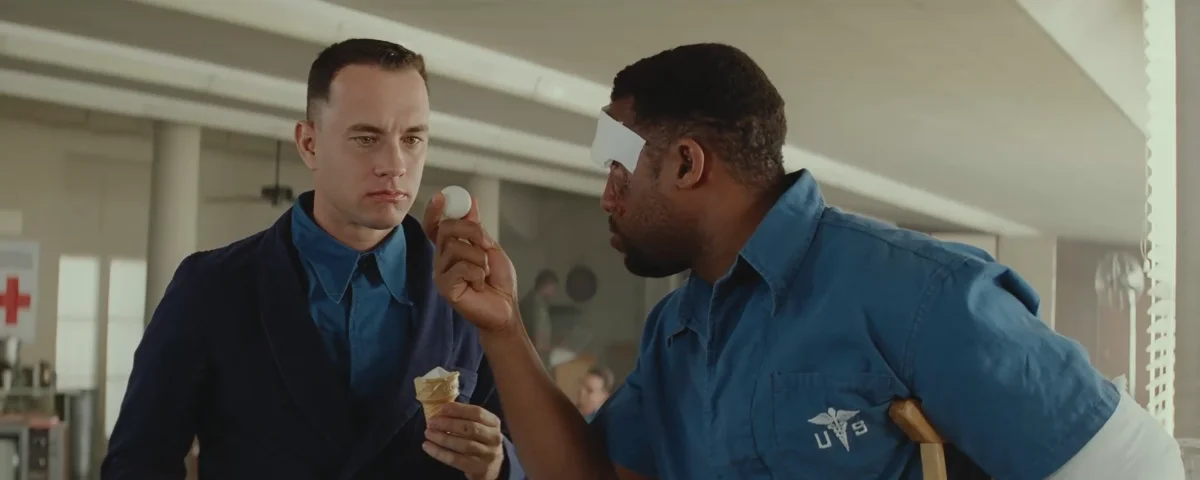
Recovering from his wounds, Forrest is handed a ping-pong paddle and one piece of advice: never take your eye off the ball. Now, Forrest takes things literally — that's his whole character — so he does exactly that. He never takes his eye off the ball...and becomes a world-class ping-pong champion! Watch the film with a marketer's eye and the pattern repeats everywhere: this man of famously modest intelligence keeps stumbling into extraordinary results. Why? Because he has the one thing most of us, for all our cleverness, cannot seem to hold onto. Forrest Gump has focus.
And that's the uncomfortable little truth the movie keeps circling: focus beats brilliance. Not sometimes. Every time.
Focus is a Superpower
We live surrounded by endless strategies, tools, and opinions — more of them every year, all shouting for your attention. In that environment, the ability to focus has quietly become a kind of superpower, precisely because it's so rare. Everything in the modern world is engineered to fracture your attention and sell you the next thing. The person who can calmly ignore ninety percent of it and stay locked on the few things that matter is operating with an advantage most of their competitors have traded away without realizing it.
Here's the reassurance I wish someone had handed me years ago, back when I was building the first version of this program and quietly worried it was too much: you do not have to master it all. You never did. The goal was never to become brilliant at every strategy in existence. It's to stop chasing everything and start focusing on the few things that will actually move you forward. Because in the end it's not about how many tools you own. It's about which ones you'll use consistently, and use well.
Brilliance is overrated. Execution isn't.
Let me be real about something, because our culture badly oversells raw brilliance. Most genuinely successful people I've known will be the first to tell you they aren't the smartest person in the room — and they're not being modest. They're focused, and that focus is what gives them the discipline to follow through. (Watch closely and you'll notice they tend to surround themselves with brilliant people to cover the gaps. That's not a weakness; that's focus applied to hiring.)
Everything — and I mean everything — comes down to activity and execution. Ideas alone won't do it. Intelligence alone won't do it. Even great messaging, sitting there unused, won't do it. To get results you have to deploy, and you have to deploy consistently. This is exactly why scattered, sporadic effort fails: a burst of brilliant activity followed by two weeks of nothing is just random acts of prospecting in a nicer outfit. The antidote isn't more brilliance. It's focused, repeated action — which is why we'd always rather you take imperfect action today than wait to be brilliant tomorrow, and why as little as twenty focused minutes a day will out-produce the occasional heroic all-nighter.
Focus on a few things — not everything
Naturally this raises the obvious question: focus on what? And that's the right question — important enough that it gets its own full treatment elsewhere in this section, where we talk about choosing your handful of high-leverage priorities. For now, the principle is enough: your energy belongs on a small number of the right activities, the ones that fit your strengths and genuinely serve the people you're trying to reach. Part of that is even choosing the right people to begin with, because focus applies to your market as much as your calendar — not everyone is a prospect, and trying to be everything to everyone is just distraction wearing a productive disguise. Pick your few. Then keep your eye on the ball.
How Prospect & Flourish approaches this
Throughout this program we've pushed focus in every form we could — a focused market, a focused message, a focused set of activities. That's not an accident, and it's not filler. It's because we know how easy it is to get overwhelmed by the sheer volume of what you could be doing, and to respond by either doing far too much or, paralyzed, doing nothing at all. What this means to you is a genuine relief: you are allowed to let most of it go. You don't have to be brilliant, and you don't have to be everywhere. You have to pick the few things that matter, keep your eye on them, and come back to them tomorrow. That's not a lowering of the bar. It's where the real results have been hiding the whole time.
Frequently asked questions
Doesn't focusing on just a few things mean I'll miss opportunities?
Yes — and that's the honest cost of focus, so let's not pretend otherwise. Choosing a few things means deliberately letting other things go, and some of those will have been real opportunities. But here's the trade you're actually making: a few opportunities pursued consistently and well, versus many opportunities all pursued halfway and abandoned. The scattered approach doesn't capture more; it captures less, because nothing gets the sustained attention it needs to bear fruit. Missing some opportunities on purpose is the price of actually cashing in on the ones you keep. It's a bargain.
Isn't “focus beats brilliance” just an excuse for not being excellent?
It would be, if I were telling you to be sloppy — but I'm not. Focus and quality aren't opposites; they're partners. The whole point of doing fewer things is that you can do them well, with real attention, and get better at them over time. What I'm arguing against isn't excellence. It's the fantasy that being clever or talented, by itself, produces results without the unglamorous work of consistent execution. Be as excellent as you can at your few things. Just don't mistake brilliance for a substitute for showing up.
How is this different from just being disciplined?
They're cousins, but not twins. Discipline is the willpower to make yourself do hard things — and as we discuss elsewhere, willpower is finite and eventually runs dry. Focus is narrower and more sustainable: it's less about forcing yourself through everything and more about protecting your attention for a few things and refusing the rest. Discipline says “push harder.” Focus says “do less, but don't take your eye off it.” The second one, in my experience, is far easier to keep for the long haul.
What if I genuinely don't know which few things to focus on yet?
That's common, and it's not a failure — it just means the selecting comes first. The short version: look back over where you've already seen a little traction, and notice which activities energize you rather than drain you, because those are the ones you'll actually sustain. Choosing your priorities well deserves real thought rather than a snap guess, so we give it a dedicated conversation of its own in this section. Start there. You can't keep your eye on the ball until you've decided which ball you're watching.
Hero illustration created with AI, art-directed by Keith F. Luscher. Film still from Forrest Gump (1994, Paramount Pictures).